New York's English learners had lower chronic absenteeism in 2024-25 than at the pandemic-era peak, but the pace of recovery differed sharply by school level. In elementary and middle school, their rate fell from 32.3% in 2021-22 to 28.8%, a decline of 3.5 percentage points. In high school, it fell from 48.2% to 40.6%, a decline of 7.6 points.
Those are the most recent published statewide figures, covering 2024-25 rather than the current school year. They do not support a single statewide claim that English learners' attendance recovery has stalled. They show slower recovery among younger students and a larger decline among high school students.
The Slower Recovery Is Among Younger Students
Elementary and middle school English learners remained above the all-student rate of 24.6% in 2024-25. Their decline from the peak was also smaller than the all-student decline of 5.2 points.
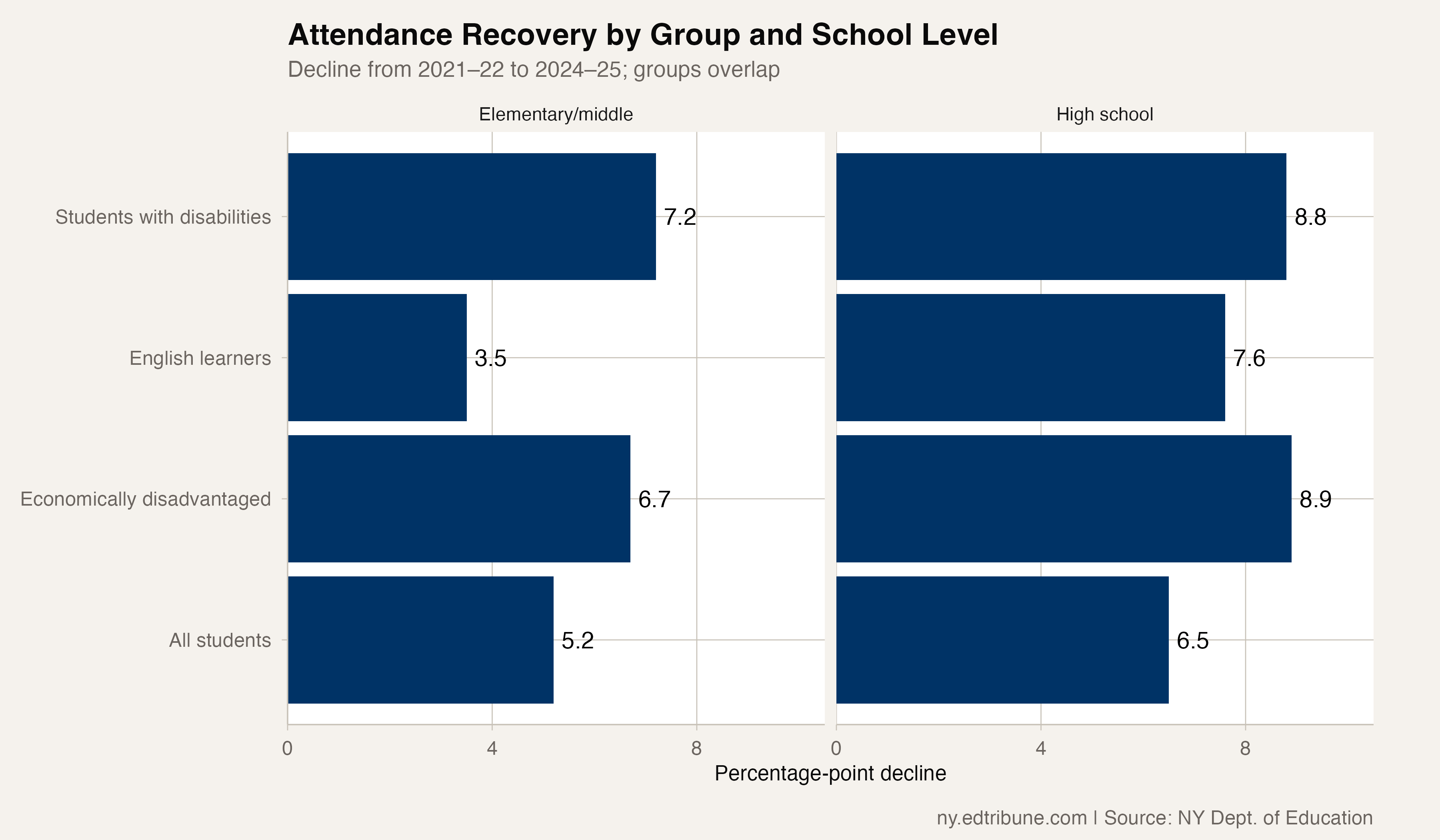
The same comparison holds against the other service groups examined here. Students with disabilities recorded a 7.2-point decline; economically disadvantaged students, 6.7 points. English learners had the smallest decline among these groups and the all-student population. These categories overlap, so their rates should not be added or treated as separate pieces of the statewide total.
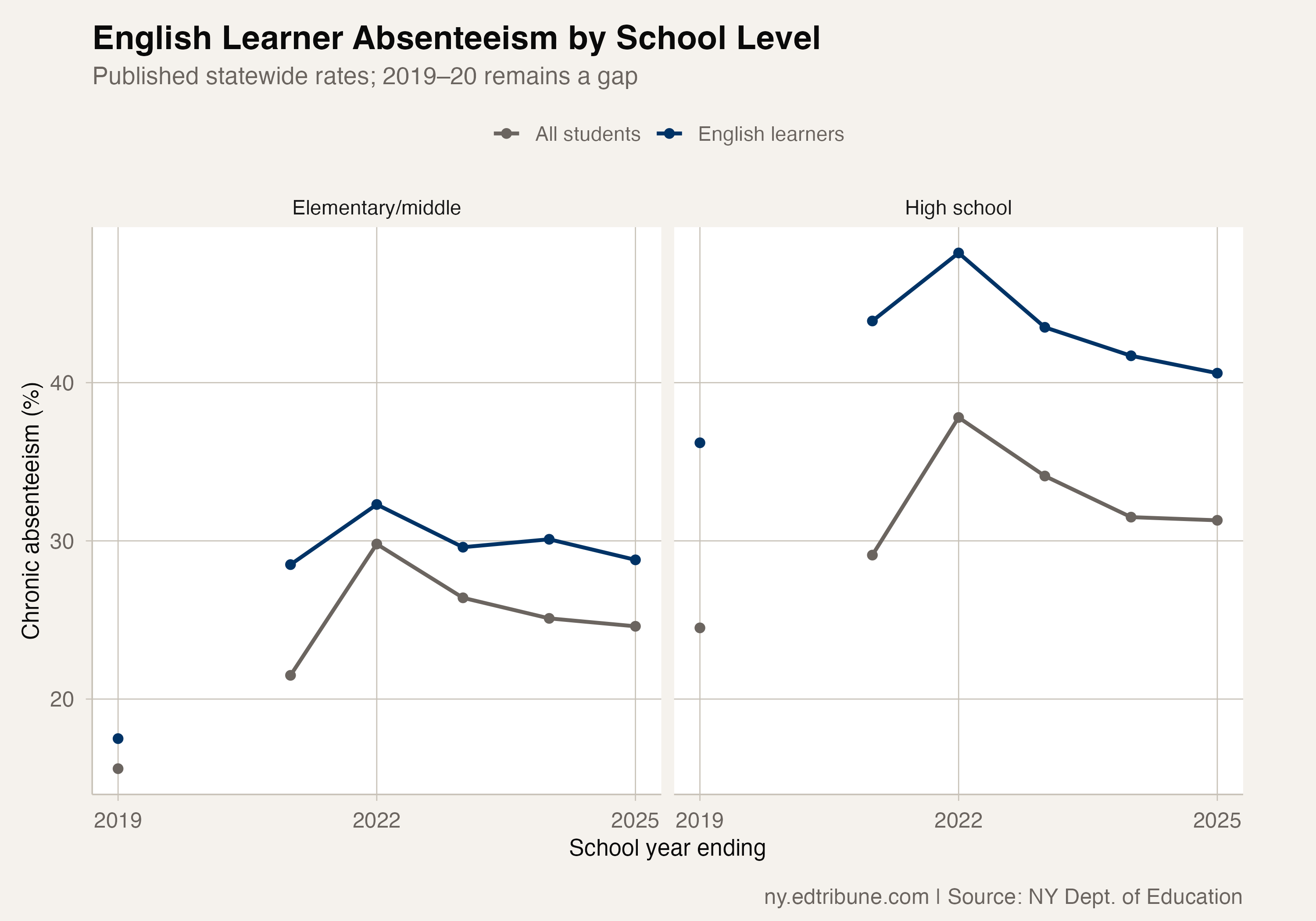
The English learner rate did decline in the latest year, from 30.1% to 28.8%. That improvement leaves it well above its 2018-19 level of 17.5%. The difference is 11.3 percentage points.
High School Shows a Different Pattern
High school English learners' decline from the peak exceeded the all-student decline of 6.5 points. It was smaller than the declines for students with disabilities and economically disadvantaged students, but it was not the slowest recovery in this comparison.
| Student population | Elementary/middle decline | High school decline |
|---|---|---|
| All students | 5.2 points | 6.5 points |
| English learners | 3.5 points | 7.6 points |
| Students with disabilities | 7.2 points | 8.8 points |
| Economically disadvantaged | 6.7 points | 8.9 points |
Declines compare 2021-22 with 2024-25. Student groups overlap.
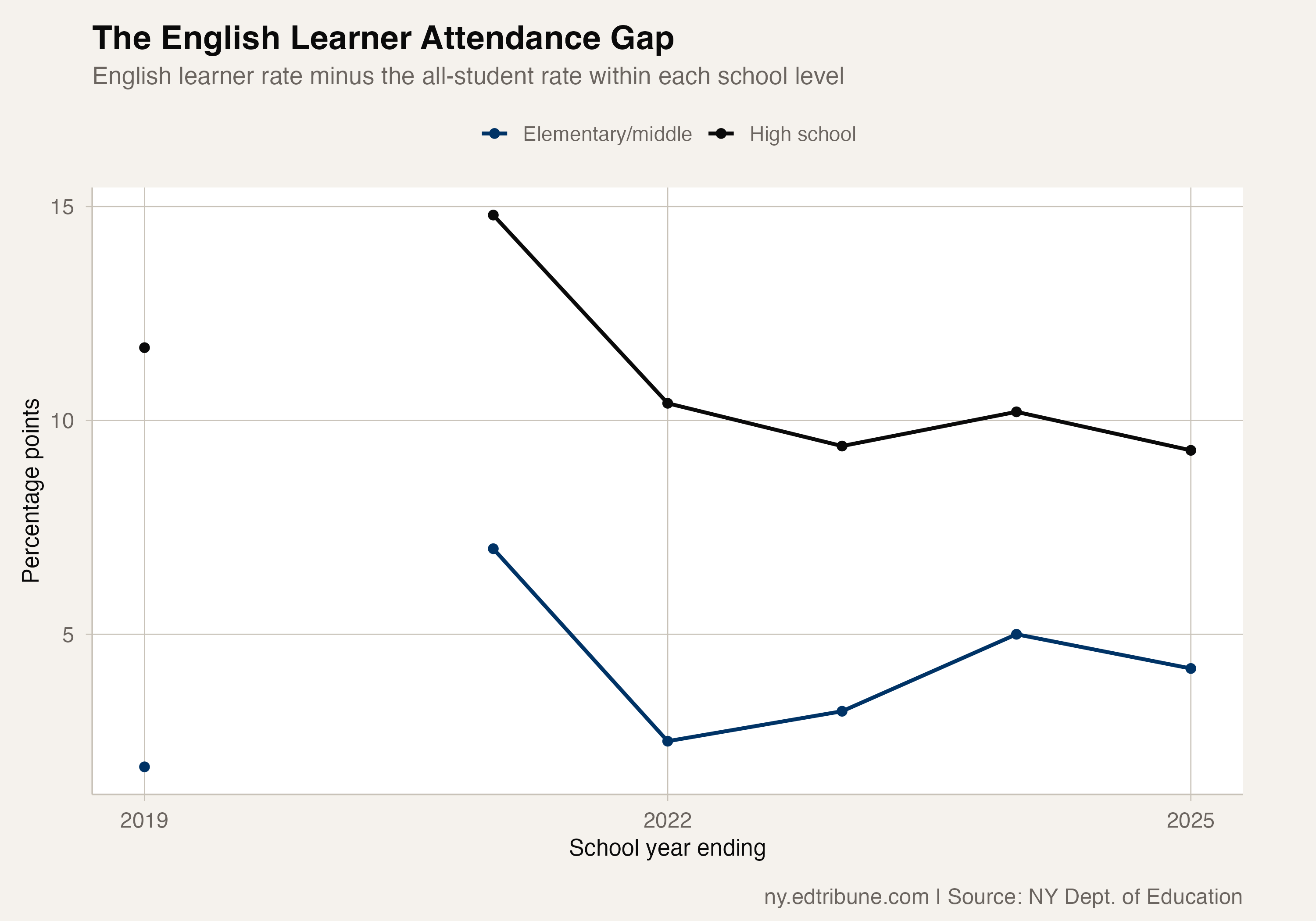
The high school English learner rate remained above the all-student rate of 31.3%. Its gap with all students narrowed from 11.7 points in 2018-19 to 9.3 points in 2024-25. Among elementary and middle school students, the gap moved in the opposite direction: from 1.9 points to 4.2 points.
What the Rates Can Tell Us
NYSED defines chronic absenteeism by how much of a student's enrolled instructional time was missed, and reports elementary/middle and high school rates separately. This is a measure of students crossing an annual absence threshold, not the percentage missing on a typical day.
The annual figures compare changing student populations. They do not follow a fixed set of children through recovery or identify why absences occurred. There is also no published observation for the missing 2019-20 year in this series; the chart leaves that gap visible.
For attendance planning, the school-level distinction matters. English learners still had higher absenteeism than all students at both levels. The widening younger-student gap and narrowing high school gap call for separate questions about local attendance patterns, rather than a single explanation for all English learners statewide.
Detailed code that reproduces the analysis and figures in this article is available exclusively to EdTribune subscribers.
Discussion
Sign in to join the discussion.
Loading comments...