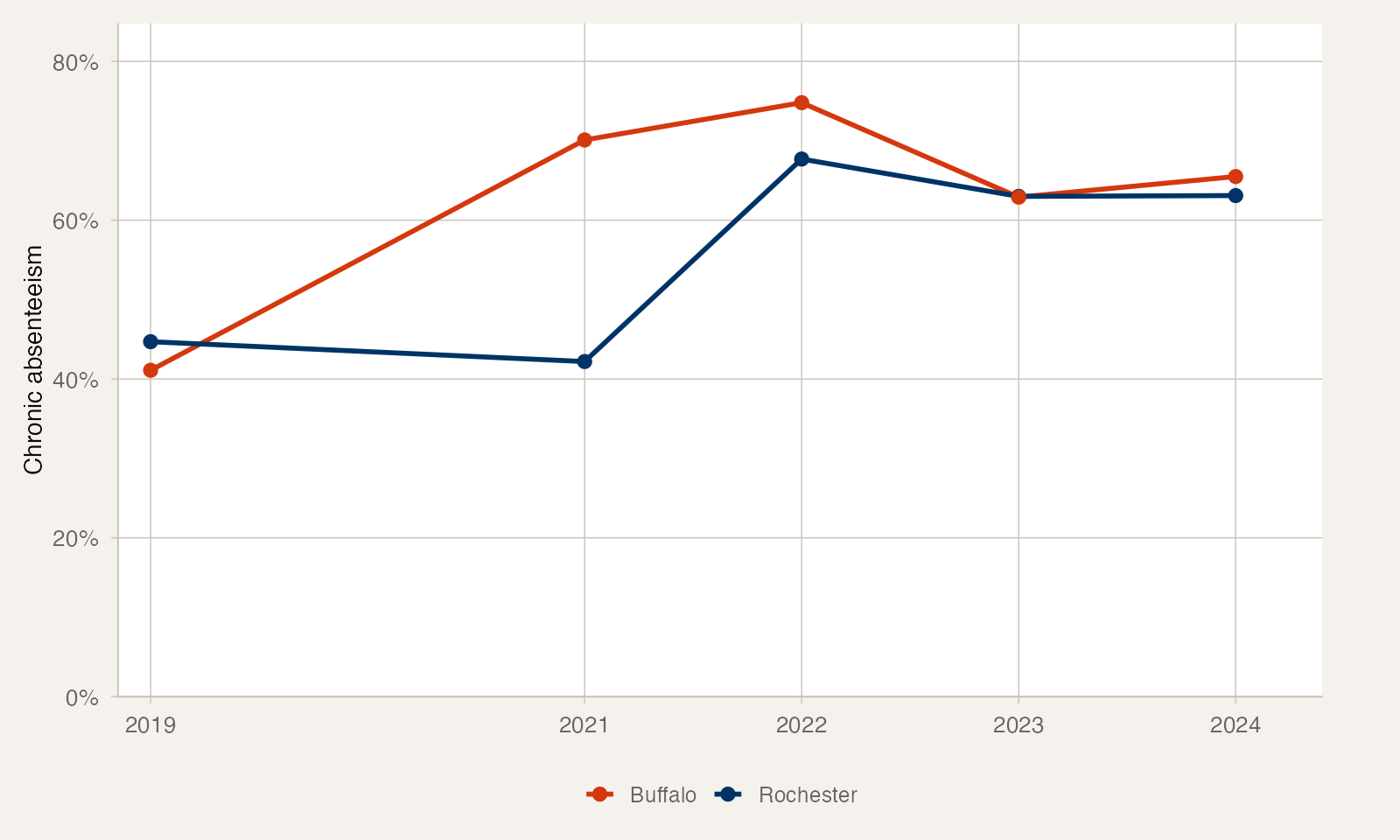
Rochester City School District↗ET improved its chronic absenteeism rate from 67.7% in 2022 to 63.0% in 2023. Then it stopped. In 2024, the rate was 63.1% — essentially unchanged, a rounding error's difference from the year before.
That 0.1 percentage point increase is not a spike. It is something worse: a plateau. Rochester's attendance crisis has found a floor, and 12,723 of 20,165 students are sitting on it.
A District That Was Already in Trouble
Rochester's chronic absenteeism problem predates the pandemic. Its published rate was already 44.7% in 2019. It reached 67.7% in 2022 before falling to 63.0% in 2023 and holding near that level in 2024. The district rows establish that trajectory but do not identify its causes.
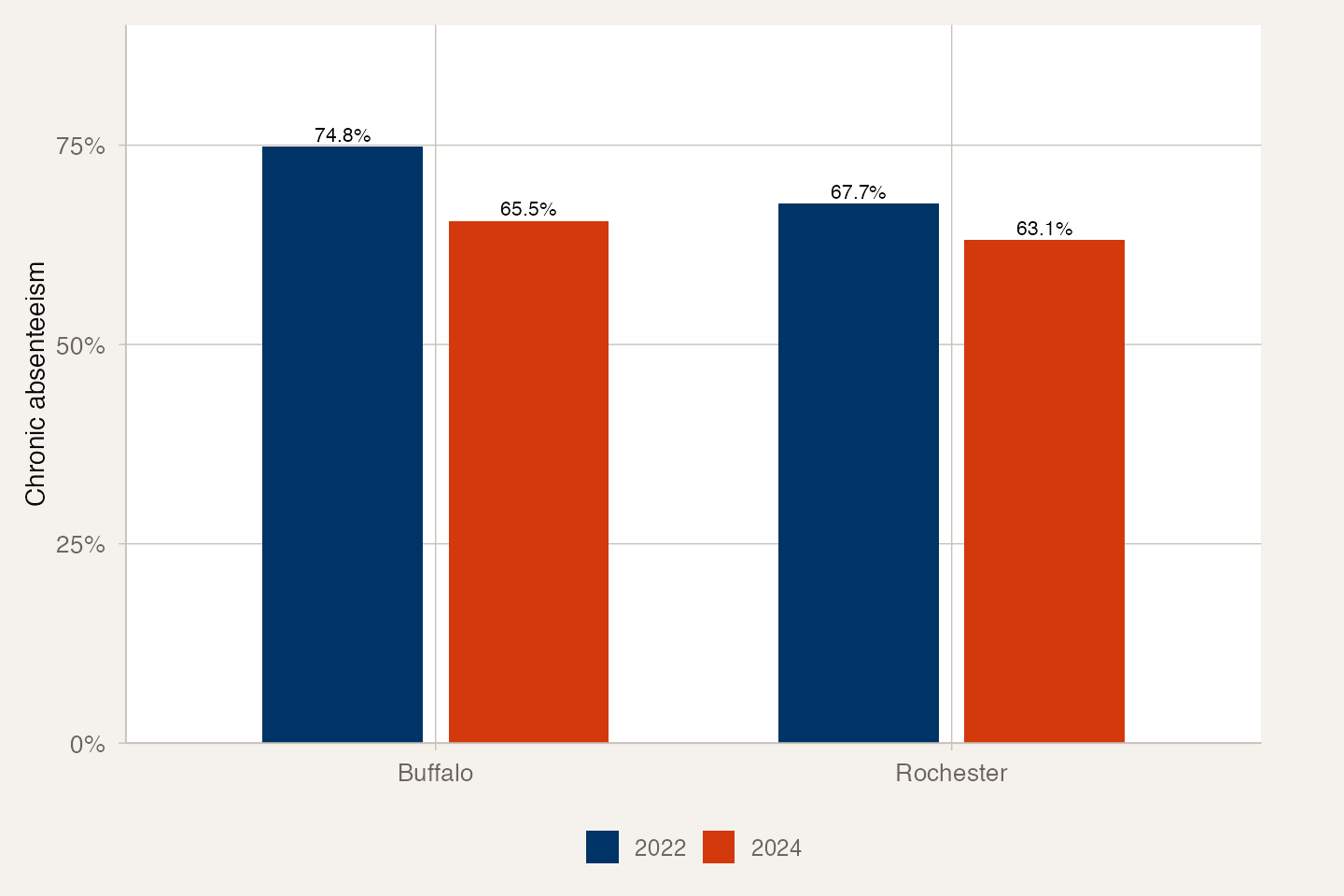
The plateau is especially striking when compared to Buffalo↗ET, which peaked higher at 74.8% but has shown a clearer downward trajectory (to 65.5% in 2024, despite a bump from 62.9%). Rochester peaked lower and recovered less.
High Rates Across Student Groups
Within Rochester, Hispanic students had a 69.5% chronic rate. Special education students were at 67.2%. Economically disadvantaged students — who made up 87% of the district — were at 65.7%. White students numbered 1,758 and had a 48.4% rate. English learners were at 61.8%.
Two Cities, Two Trajectories
Buffalo↗ET and Rochester started in similar places before the pandemic and ended in similar places after it. But their recovery paths diverge. Buffalo improved by 9.3 percentage points from its peak; Rochester by just 4.6. Buffalo's recovery, while insufficient, is at least directional. Rochester's has stalled.
Greece Central School District↗ET cut its chronic rate from 34.9% to 17.0%, a decline of 17.9 percentage points. The comparison shows different published trajectories; this analysis does not test why they differ.
What a Plateau Means
A plateau at 63% is not a return to the pre-pandemic baseline. Nearly two in three enrolled students met New York's chronic-absence definition in 2024.
Rochester enrolled 4,715 fewer students in 2024 than in 2019, while its chronic-absence rate was 18.4 percentage points higher. The data does not establish who left or how the enrollment decline affected attendance.
The next published attendance year will show whether Rochester moved off the 2023-2024 plateau.
Detailed code that reproduces the analysis and figures in this article is available exclusively to EdTribune subscribers.
Discussion
Sign in to join the discussion.
Loading comments...